
Into the Woods: How One Forest Became a Dozen Different Places
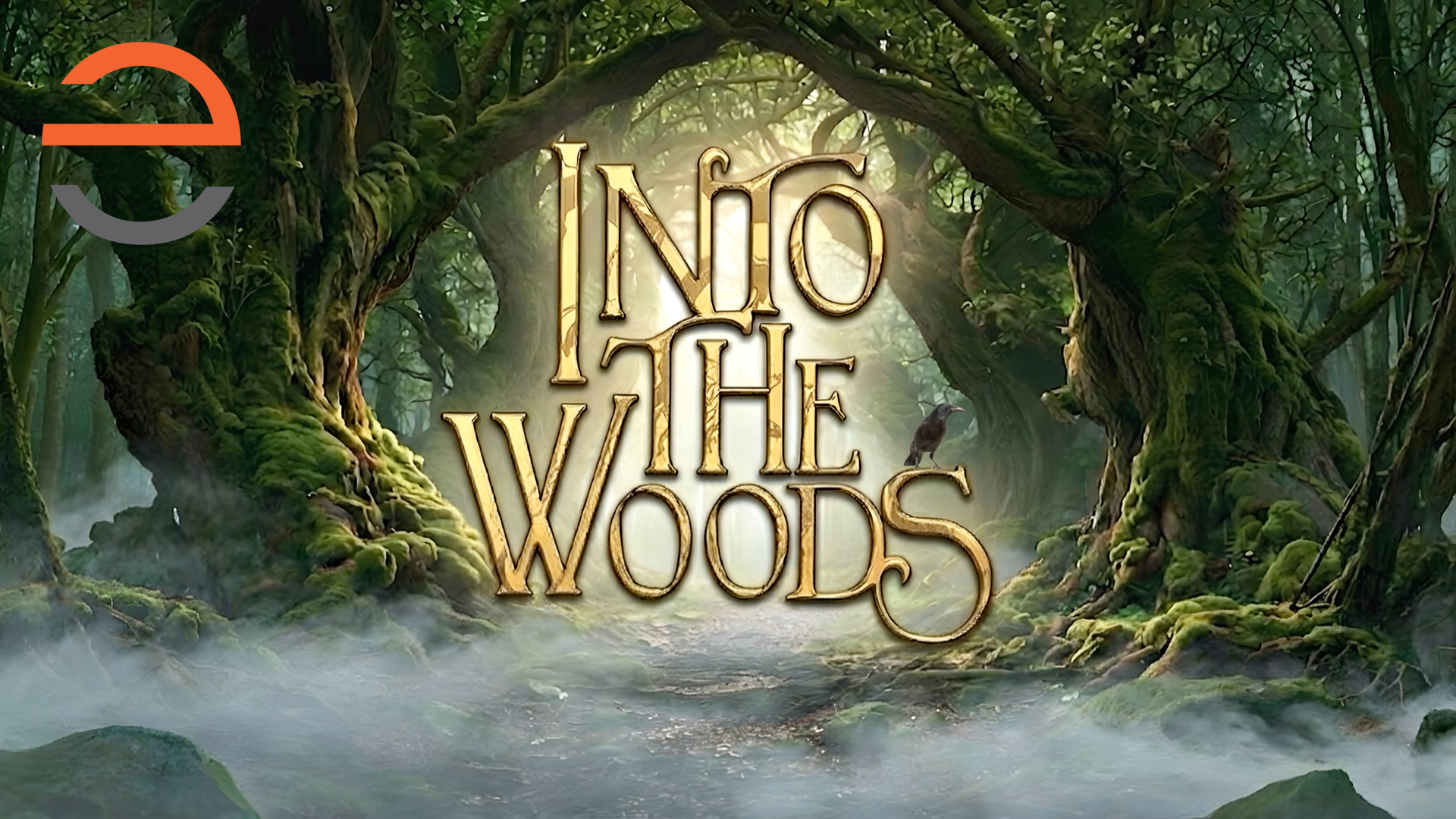
Most shows move you somewhere new every scene. Into the Woods doesn't. For nearly the entire show, the setting is the same place: the woods. Every storyline - Cinderella's, Jack's, Little Red's, the Baker and his wife's - runs through the same forest, often within minutes of each other.
That's a real production problem. If "the woods" always looks like the same patch of trees, the show starts to feel visually flat no matter how well it's directed or performed. The forest has to do work that a set change would normally do - tell the audience where they are, whose story this is right now, what kind of moment they're in - while still reading as one continuous world, scene after scene, even though the specific spot on stage keeps changing.
So instead of treating "the woods" as one environment, we built well over a dozen distinct moods, all belonging to the same continuous forest world.
The Toolkit: Light, Fog, and Color Grading as Storytelling
Each of those spots is its own backdrop - Cinderella's tree, Jack's clearing, the Prince's still pool - but what makes them all read as the same forest, rather than a patchwork of unrelated places, is how consistently we apply light, fog density, and color grading across every one of them.
Three variables do almost all of the work:
Color temperature - warm golden light reads as safety, wonder, or intimacy. Cool blue light reads as night, uncertainty, or danger.
Fog density - a light morning haze feels atmospheric and pretty. Heavy ground fog, especially paired with cooler light, feels like something is being hidden or is about to happen.
Color grading - a lush, heavily saturated green makes the forest feel alive and abundant. Pulling saturation back, even slightly, makes the same trees feel older, stiller, more austere.
None of these are dramatic effects on their own. That's the point - a director doesn't want the backdrop shouting for attention every time the story shifts focus. The shift needs to feel almost subconscious, the way real light changes with weather or time of day, while still doing real narrative work underneath.
A Sample of the Range
Here's how that plays out across specific moments in the show:
Cinderella's Tree: A Safe Place, Lit Like One
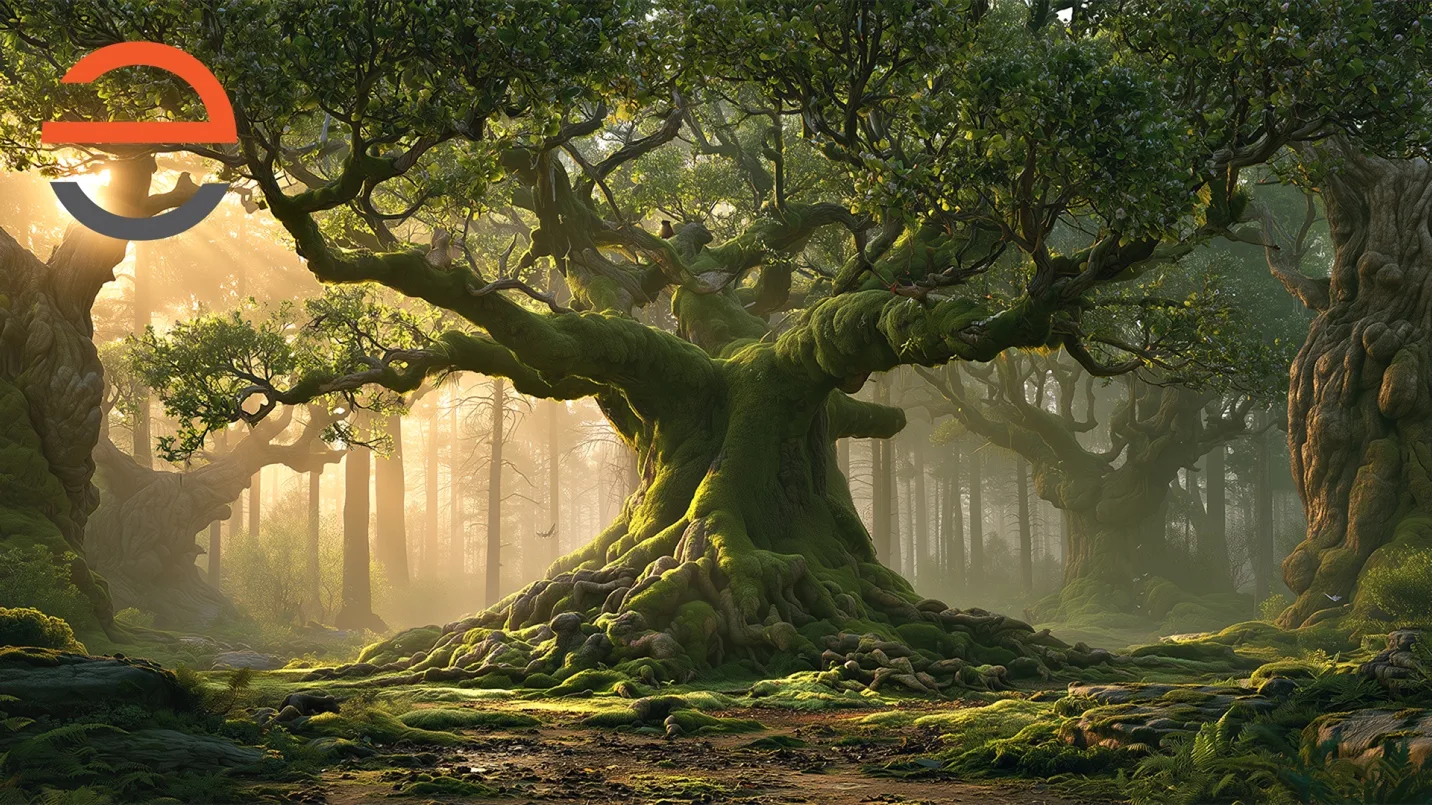
This is where she goes to make her wishes - lit in warm, golden-hour light, with visible sun rays cutting through a full, richly saturated canopy. It's the most reverent, comforting treatment in the show - this is a safe place, even though it's technically a graveyard. The warmth signals that before a single line of dialogue does.
Jack's Clearing: Uneasy Before a Word Is Spoken
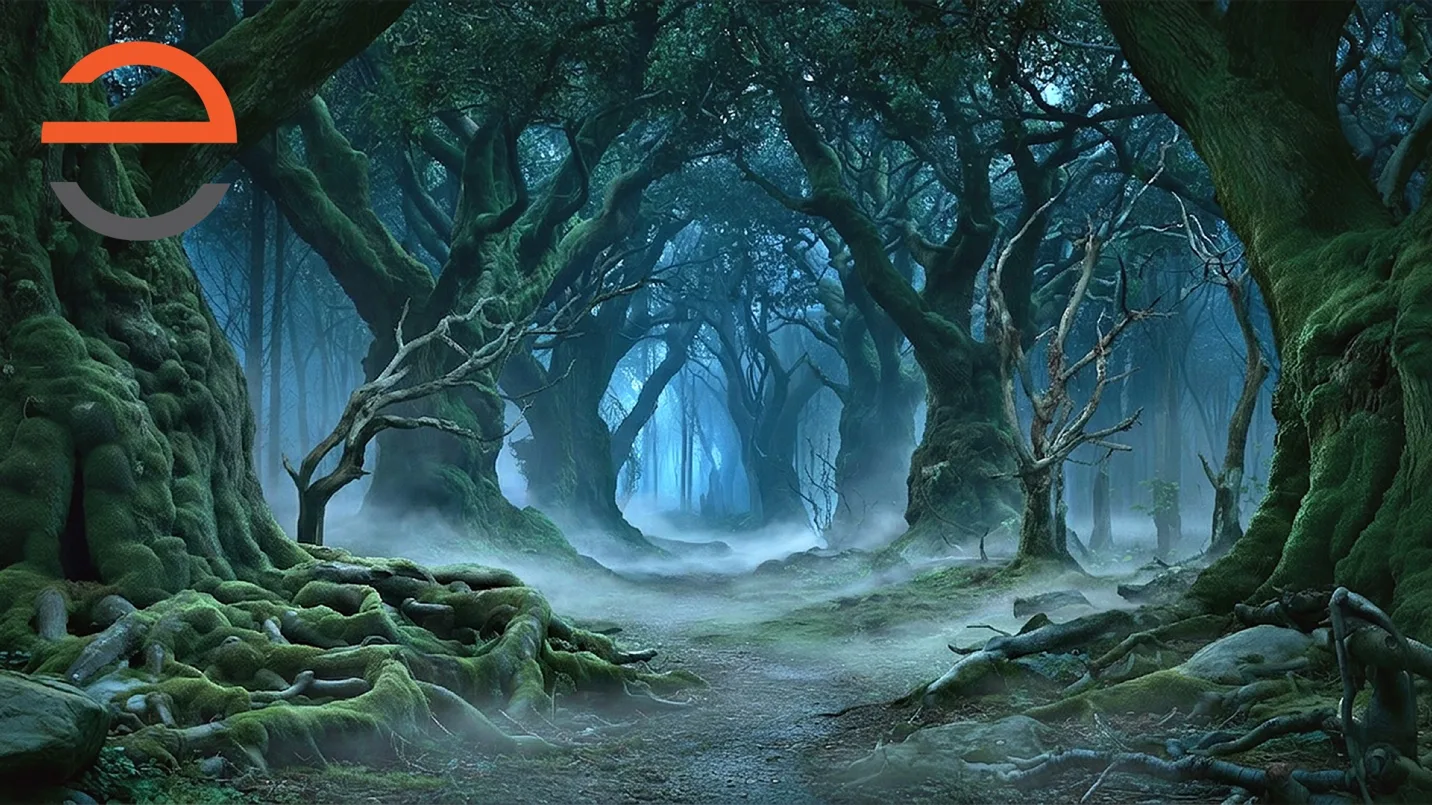
Jack's scene shifts hard into cool blue night tones, heavy fog low to the ground, and bare dead branches mixed into the living trees. It's a different clearing than Cinderella's tree, but the cool blue tones (but holding the green) and dead branches mixed into the living moss tell the audience this is an uneasy encounter before Jack says a word.
Red's Forest: An Adventure, Not a Warning
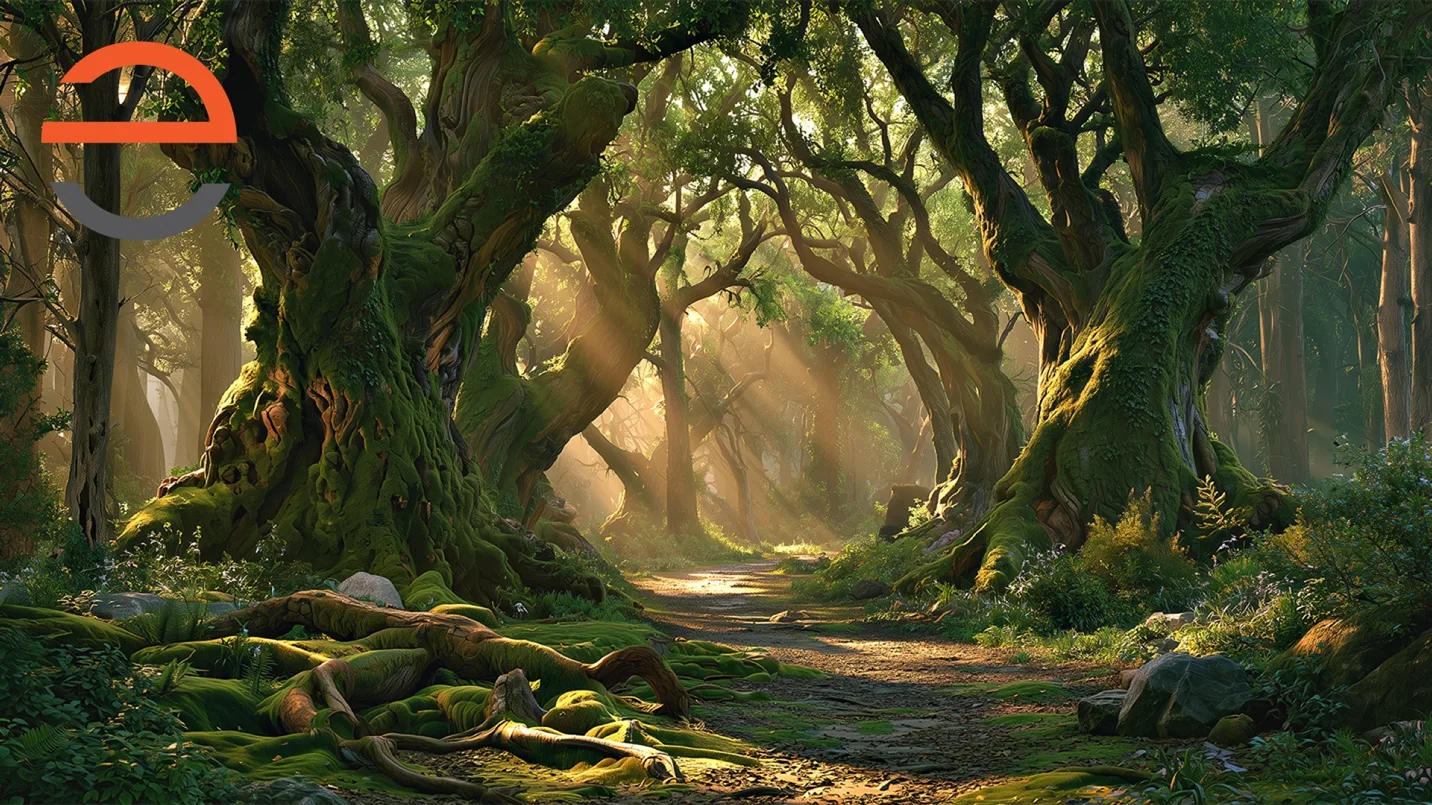
Red Riding Hood's Forest is the brightest, most classically "storybook" treatment we built: clear dappled sunlight, a well-worn path underfoot, warm but not golden. It's the forest as an adventure, not a danger - appropriate for the character who, at this point in the show, still thinks she's in a fairy tale.
Midnight in the Forest: Outside of Ordinary Time
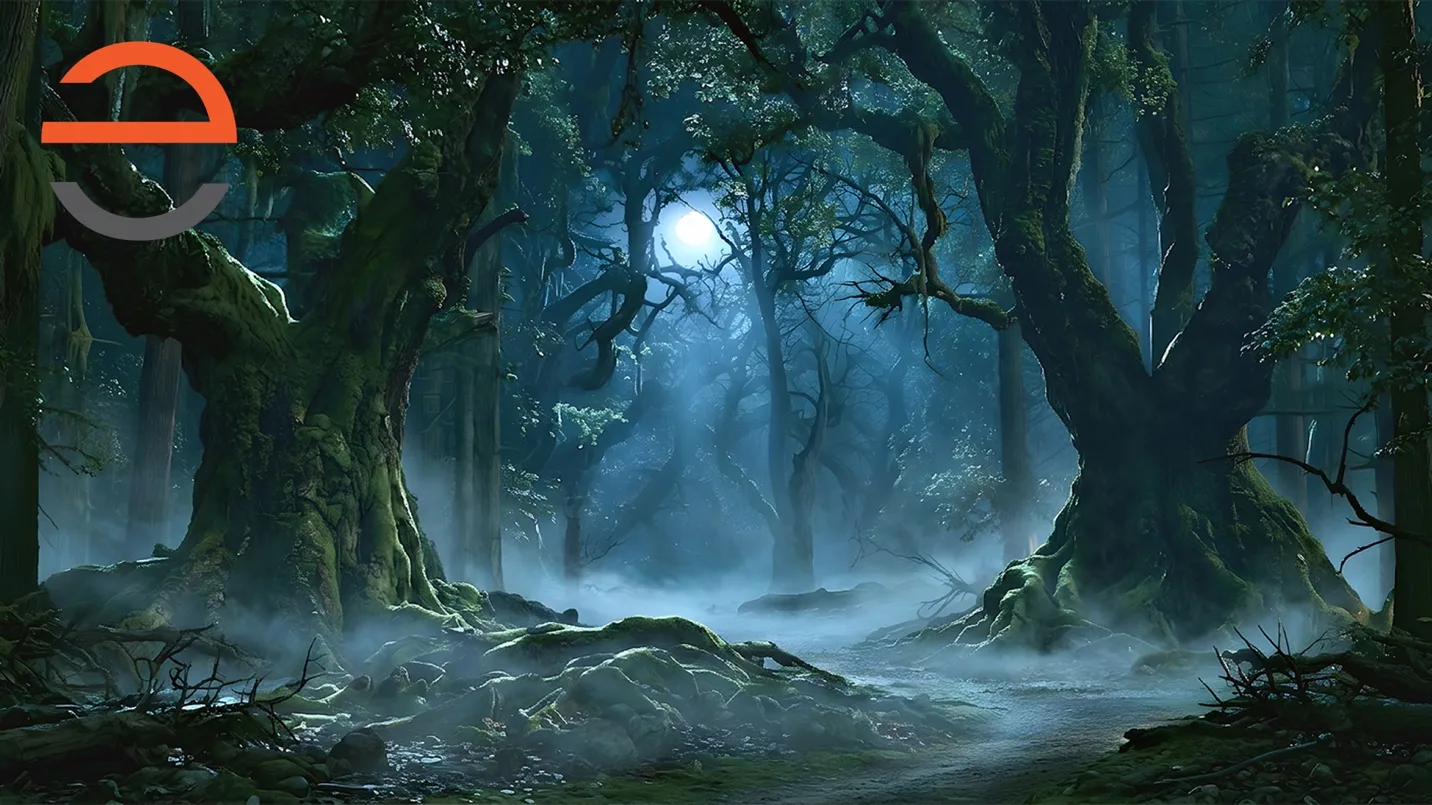
This midnight forest scene, tied to the Baker's Wife's storyline, goes further into blue than Jack's scene - a near-total moonlit palette, with fog thick enough to obscure the ground, and a single visible moon breaking through the canopy. It's the most liminal, suspended treatment in the show: less "eerie," more "outside of ordinary time."
The Prince's Forest: Composure Built Into Light
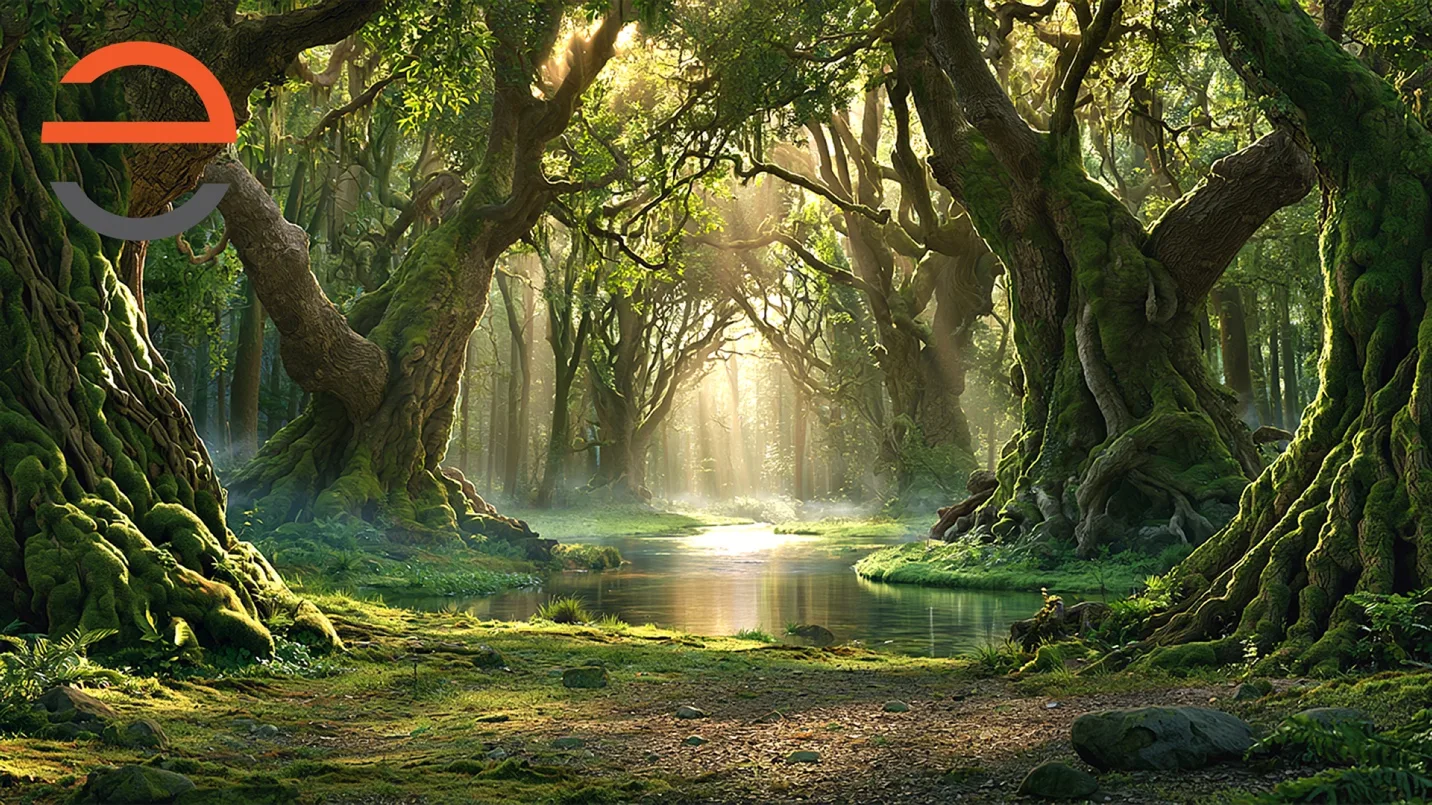
The Prince's Forest opens into a calmer, more open clearing with a still reflecting pool and soft, diffused sunbeams. Less dense, less dramatic lighting than the other treatments - intentionally, since this is meant to feel like a space of composure and control.
Wedding in the Forest: The One Moment Allowed to Be Joyful
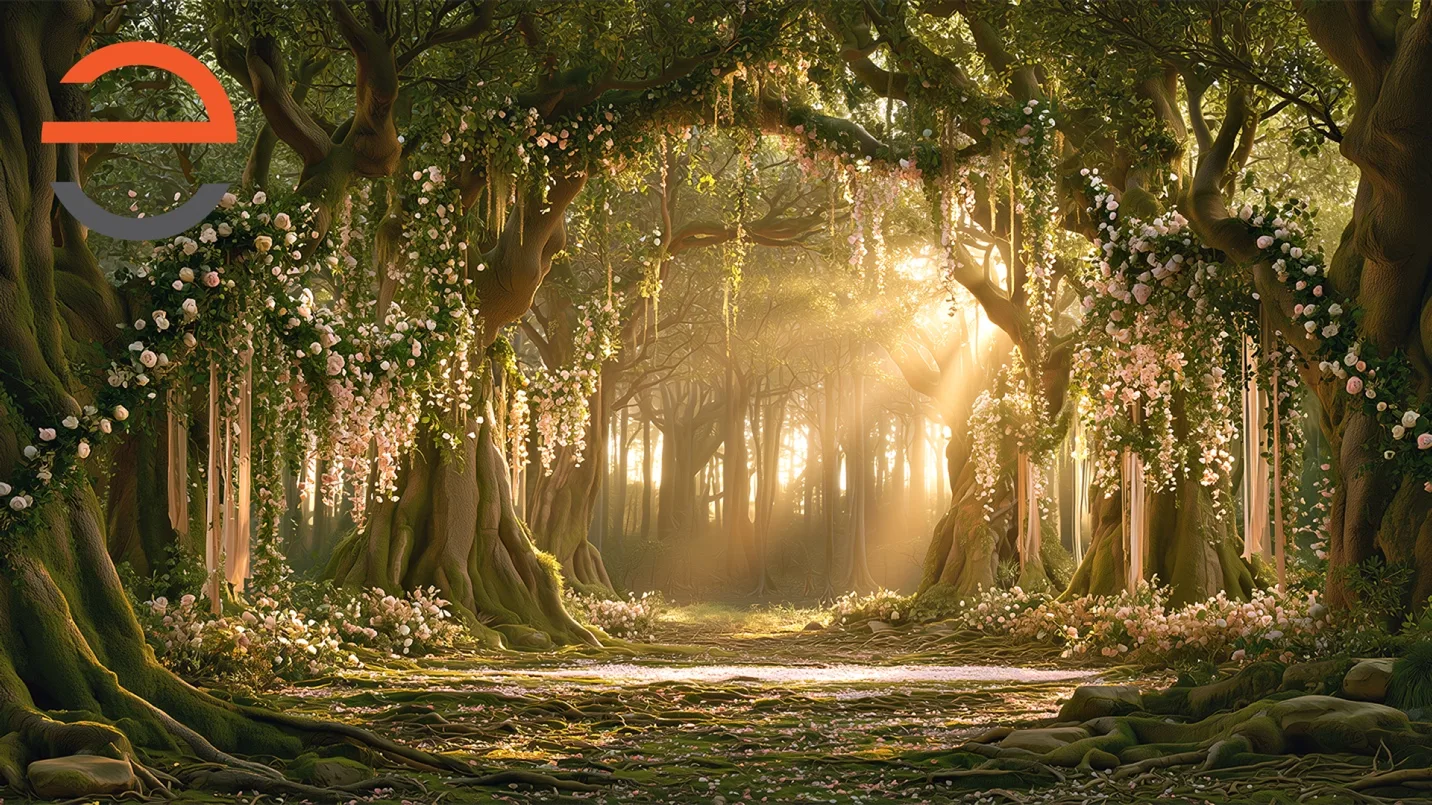
The wedding in the forest is the most saturated, most romantic treatment we built for the show: a flowering archway, warm light pouring through in visible shafts, petals scattered across the path. It's the emotional high point of the visual range - the one moment the same forest is allowed to feel unambiguously joyful. As a side note, this scene called for butterflies in the final pass.
And these are only six of the sixteen distinct forest treatments built for the show - from the woods at dawn to the Giants in the Sky to the wreckage of the Fallen Woods later on.
When the Mood Shifts Mid-Scene
Most of what's described above is scene-to-scene variation - a different look for a different moment. But at one key point in the show, the mood shifts during a scene, on cue, while the audience watches: the Fallen Woods falling under a shadow. As the story turns and the world the characters know starts coming apart, that same forest darkens in real time, timed to the exact beat the moment calls for - not on a fixed clip length, but the instant the director calls for it. It's the same cueing technique behind every transformation moment we build, applied here to mood rather than magic: the world going dark, right when the story does.
Why This Matters for Your Production
If you're staging Into the Woods, the practical upside is that your forest never goes stale, even though you're staying within one forest world for nearly the entire show. A director can lean on the backdrop itself to help signal whose scene this is and what emotional register it's in, which matters a lot in a show where storylines interweave quickly and the same setting has to serve all of them.
It also means you're not stuck lighting a single generic "forest" backdrop with your own house rig and hoping it reads differently scene to scene. The mood is already built into the scenery.
We encourage you to watch the actual animated scenes over on our YouTube.
It's not magic, it's production.
- James