
The Little Mermaid Set Design: How the Three Worlds Work

The short answer: The Little Mermaid is one of the few shows whose scenery genuinely lives in three separate worlds - under the sea, on the surface, and on land - and the show is built that way. Our full package uses 34 scenes, and the Jr. version uses 26, divided across those worlds in a pattern that holds whether you project every scene or mix projection with built pieces.
This post walks through how the scenes divide up, what actually makes an underwater scene read as underwater, and how the two moments directors worry about most - Ariel's transformation and the destruction of Ursula's lair - work on stage. If you are still deciding how many scenes your production needs at all, start with our scene-count guide, then come back here for the show-specific details.
How The Little Mermaid's Scenes Split Across Three Worlds
Walk the show scene by scene and nearly every moment lands in one of three worlds. Under the sea is King Triton's court, Ursula's lair, Ariel's grotto, the Mersisters' girl cave, and the Under the Sea! number. The surface is where the storm story lives: Prince Eric's ship in three states, Ariel watching from the water, Rough Waters, the rescue, and Scuttle flying toward the shore. On land you get the beach, Eric's palace - Ariel's chambers, the kitchen, the banquet hall, and the ballroom in day, sunset, and night treatments - the bay, and the wedding.
Counted up, that is 10 scenes under the sea, 11 on the surface, and 13 on land in the full package. The Jr. version keeps the same shape with 26 scenes. The practical value of the split is that it tells you where your build effort should go: the land world is the one actors physically live in, while the water worlds are the ones a flat simply cannot do.
| World | Scenes | Includes |
|---|---|---|
| Under the sea | 10 | Triton's court, Ursula's lair, Ariel's grotto, Under the Sea! |
| The surface | 11 | Eric's ship, the storm, Rough Waters, Scuttle's flight |
| On land | 13 | The shore, the palace interiors, three ballrooms, the wedding |

What Makes an Underwater Scene Read as Underwater?
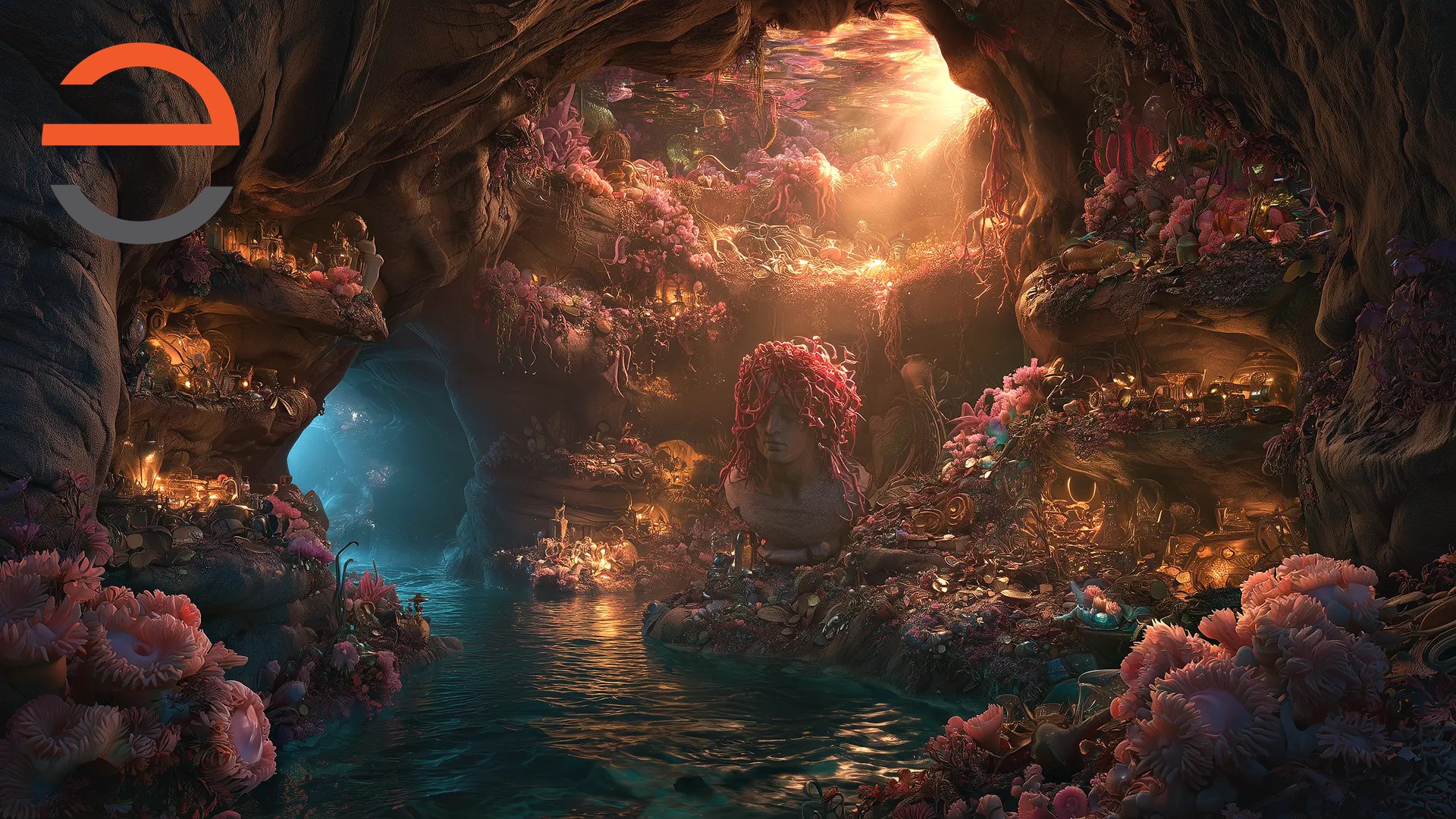
The obvious answer is light: shafts from above, rippling reflections, a deep blue-green palette. We use all of that. But the thing that makes an audience read a scene as underwater within a second is simpler than any of it: fish, jellyfish, and sea turtles. Fill the frame with life drifting through it and nobody wonders whether they are looking at a blue room.
We did not over-engineer it. The sea life does the work of telling the audience where they are - fish in Triton's court, jellyfish and sea turtles in the scenes that need a slower, deeper feel - and everything else, the color, the light, the slow movement of the water, supports that first impression. It is the same principle we apply to any environment: give the eye one unmistakable cue and the imagination fills in the rest. In The Little Mermaid that cue lives in King Triton's court, Ariel's grotto, the Mersisters' girl cave, and every other scene below the waves.
Staging Ariel's Transformation
Ariel's transformation runs across two scenes, and the journey between them is the point. Part 1 begins in Ursula's lair, the darkest room in the show. Part 2 picks up under the water but right at the surface - just beneath the waves - so that the following scene lands her on the beach with legs. Staged back to back, the two cues walk the audience up through the water column, from the deepest, darkest place in the story to daylight breaking overhead.
The destruction of Ursula's lair is the other set piece in the underwater world, and it is a three-beat sequence: the lair intact, the explosion itself, and the lair afterward - wrecked and empty. Three looks for one story beat, each one a separate cue the director can time to the performance. A painted drop can only ever show you one of the three; the explosion in the middle is where projection earns its place.
The Storm Scenes Are the Easy Part
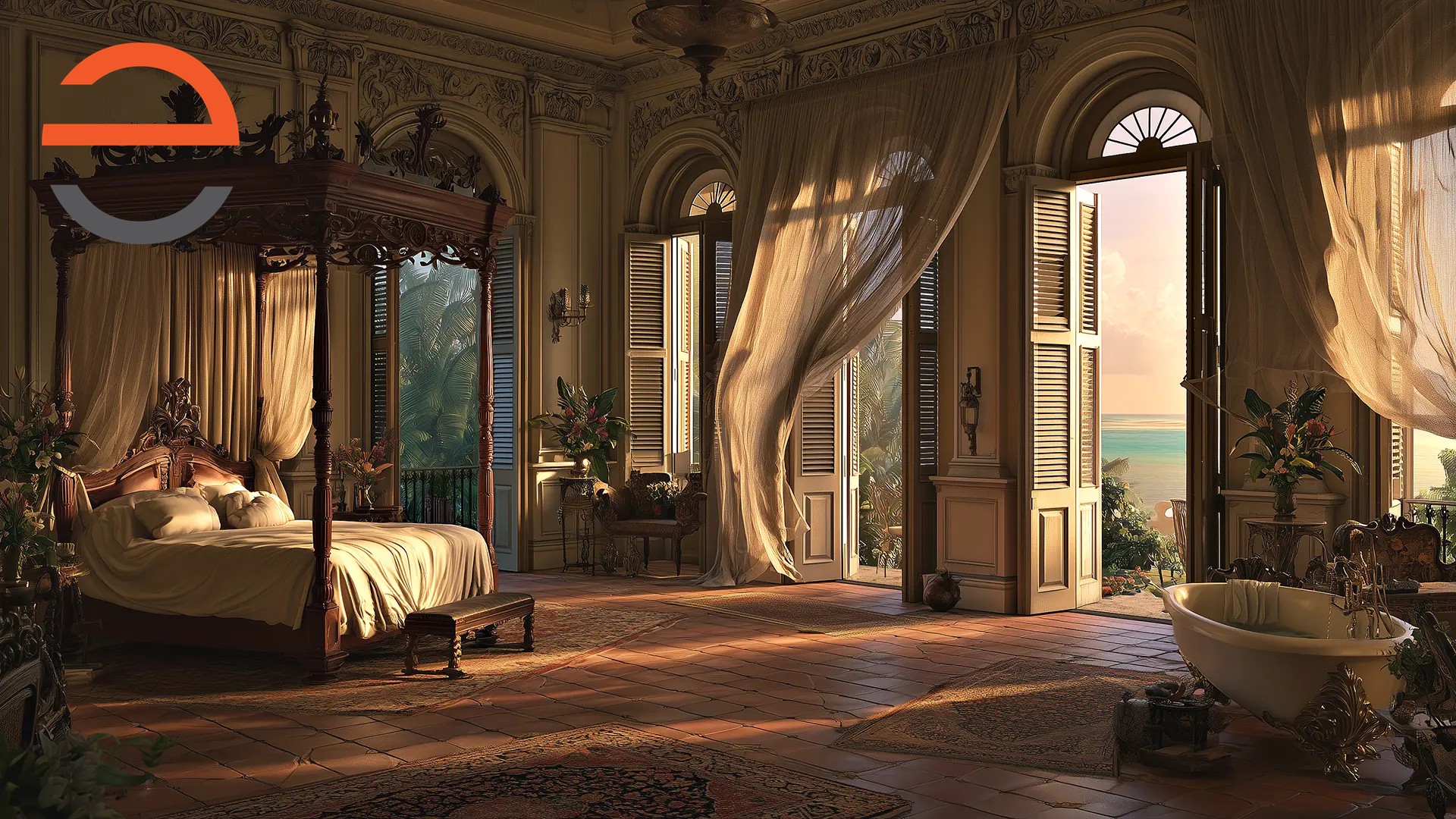
Directors almost always assume the storm is the hardest thing in the show to stage. In our experience it is the opposite. Rough Waters, Prince Eric's ship in the storm, the rescue - open water is generous material, because water is already in motion. The scenes that take the real time are the interiors, because a room has to hold up under long scrutiny: the audience sits with a palace interior for whole scenes, so every surface, fabric, and light source has to be right.
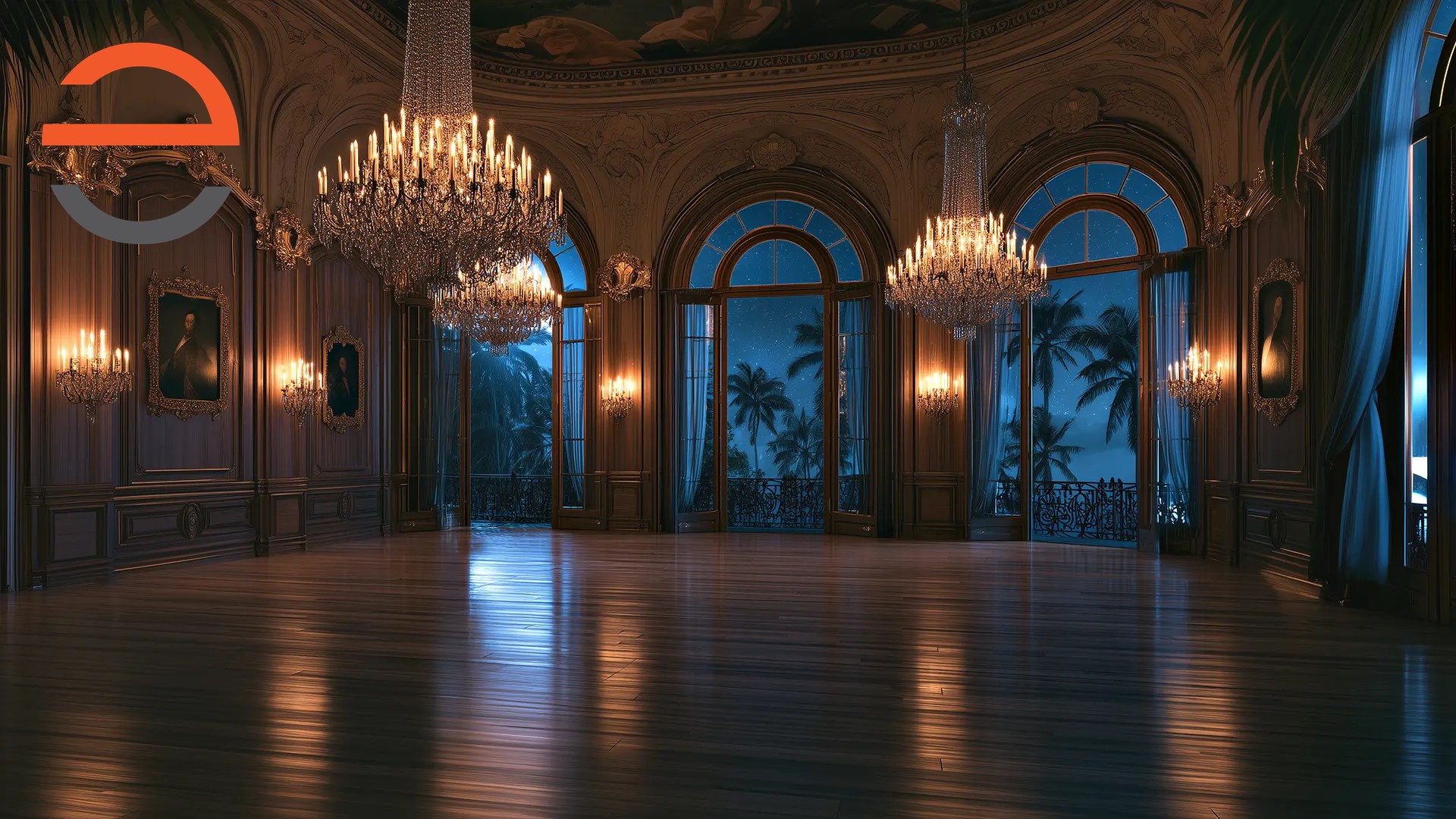
The ballroom is the clearest example. It exists in three treatments - day, sunset, and night - so the same room can carry three different story moods without a single set change. That is the kind of scenic flexibility that makes the land world affordable: build one ballroom, light three shows.
One Scene, All Three Worlds at Once
The show saves its best scenic trick for the "If Only" Quartet. That scene is built as three active panels on one stage: Ariel in her chambers at the palace, Eric under sail, and Triton in the sea - all three worlds sharing the stage in a single cue, all three panels animated at once. It is the thesis of the show's design in one image, and it is the scene audiences remember.
We use the same multi-panel technique in other shows when the story splits across places at once; our post on showing multiple locations with one scene explains how it works and when to reach for it.
Every scene in both The Little Mermaid packages is listed in the shop, and each one can be bought on its own if you only need the water worlds your set cannot deliver. If you are weighing the budget first, our cost breakdown has the real numbers.
It's not magic, it's production. - James
Frequently Asked Questions
How many backdrop scenes does The Little Mermaid need?
Our full package has 34 distinct backdrop scenes, and the Jr. version has 26. They split across three worlds: 10 under the sea, 11 on the surface, and 13 on land.
What are the three worlds of The Little Mermaid scenery?
Under the sea (Triton's court, Ursula's lair, Ariel's grotto, Under the Sea!), the surface (Eric's ship, the storm, Rough Waters, Scuttle's flight), and on land (the shore, the palace interiors, the ballroom, the wedding).
How does Ariel's transformation work on stage?
It runs across two scenes. Part 1 begins in Ursula's lair, and Part 2 takes place under the water right at the surface. Played back to back, they carry Ariel up through the water column before the next scene lands her on the shore with legs.
Which Little Mermaid scenes are hardest to build physically?
The transformation and the destruction of Ursula's lair. The destruction alone is a three-beat sequence - the lair intact, the explosion, and the wrecked lair afterward - which a painted drop cannot follow.
Can we mix projected Mermaid scenes with built set pieces?
Yes, and it is a common approach. Many groups build the palace interiors the actors interact with and project the water worlds, where projection is strongest and a physical build is hardest.