
Are Digital Backdrops Better for the Environment?

Digital backdrops can be a lower-waste way to put a musical onstage, especially when your theater already has suitable display equipment. A forest, palace, or town can appear without building and painting new scenery for that background. Where a digital scene replaces something you would otherwise make or ship, it can avoid those materials, deliveries, and the waste left after the run.
A customer told us that using our scenes saved storage space and reduced the burden of creating scenery. That is the practical appeal: more of the world onstage, with less physical scenery to create and keep. The environmental case starts with that avoided work. To make a fair comparison, we need to look at what goes into physical scenery as well as the equipment that displays a digital scene.
Can Digital Backdrops Reduce Scenery Materials and Waste?
Physical scenery has a material history before it reaches the stage. New lumber and plywood begin with harvested timber and processing. Fabric must be produced. Paint, adhesives, coatings, and hardware have to be manufactured, packaged, and transported. A design that includes sculpted foam adds another material to source and manage after closing.
That does not make wood a bad material. The Theater Green Book's sustainable sourcing guidance notes that timber can have a lower carbon footprint than steel and other structural materials, and recommends responsibly sourced timber where new material is needed. Its first advice, though, is to explore reused and recycled materials before buying new. Avoiding an unnecessary new scenic element takes that idea a step further.
Paint deserves the same attention we give a projector's electricity. Its ingredients and manufacture matter, and painting creates leftover paint, containers, and brush-cleaning water to manage. The Theater Green Book's scenic art guidance recommends reducing paint entering sinks, reusing containers, considering lower-impact paints, and choosing attachments that let frames and coverings be reused. Follow product instructions and local disposal requirements rather than treating leftovers as ordinary rubbish.
If our animated forest replaces a newly painted drop, that drop's fabric and paint are no longer needed. If a digital interior avoids building background wall units, it can also avoid their sheet goods, framing, and finishes. The picture can change from scene to scene without another round of cutting and painting. Those are concrete opportunities to reduce material demand, not a claim of zero impact.
Actors still need platforms, usable doors, furniture, and props. A digital staircase is not one they can climb. We favor keeping the useful physical pieces and letting digital scenery carry the surrounding world. Stock flats, borrowed drops, and modular units also deserve continued use: the Theater Green Book's reuse guidance recommends reclaiming floors, flats, doors, windows, and stairs rather than discarding them.
Does Digital Scenery Reduce Backdrop Shipping and Storage?
Our digital scene package does not need a physical backdrop delivered to your theater or shipped back afterward. Where it replaces rental drops, those particular outbound and return journeys are removed from the scenery plan. With suitable playback and display equipment already in the room, the new background may need no new equipment delivery either.
After closing, the digital scene does not become another rolled drop or wall unit looking for a home. Our customer's feedback about saved space and less scenery-building work is a useful example of that benefit. It is paraphrased feedback, not a measured carbon saving, but it points to a real problem for theaters without much room to keep scenery.
Include any equipment deliveries your plan still needs. Rented projectors, LED walls, screens, and supports may travel, and owned equipment needs secure storage. Digital distribution also uses powered infrastructure. The benefit is avoiding specific physical backdrop journeys and storage demands, not making the entire production delivery-free.
How Does Reusing Digital Scenery Affect Its Environmental Case?
We create a digital scene once, then it can play throughout rehearsals and performances without repainting or rebuilding that image. Different licensed productions can use the same scene artwork without making and shipping another physical copy of the backdrop. Future use still depends on licensing and compatible playback, not an unlimited-use promise.
A suitable projector or LED wall can also serve more than one show. Using equipment already installed in your venue makes the material-saving case more compelling than buying a new system solely for one run. Physical scenery can be reused too, so compare with your real stock and rental options rather than assuming every painted drop serves only one show.
Digital equipment still takes materials and energy to manufacture, uses electricity during rehearsals and performances, and eventually needs repair or responsible disposal. Keep that in the comparison: test existing equipment, use documented power consumption and realistic operating hours, and include any hire deliveries. We have not measured a production-wide footprint, so we do not offer a carbon-saving percentage. The strongest case is the unnecessary new scenery you can avoid with a system you can keep using.
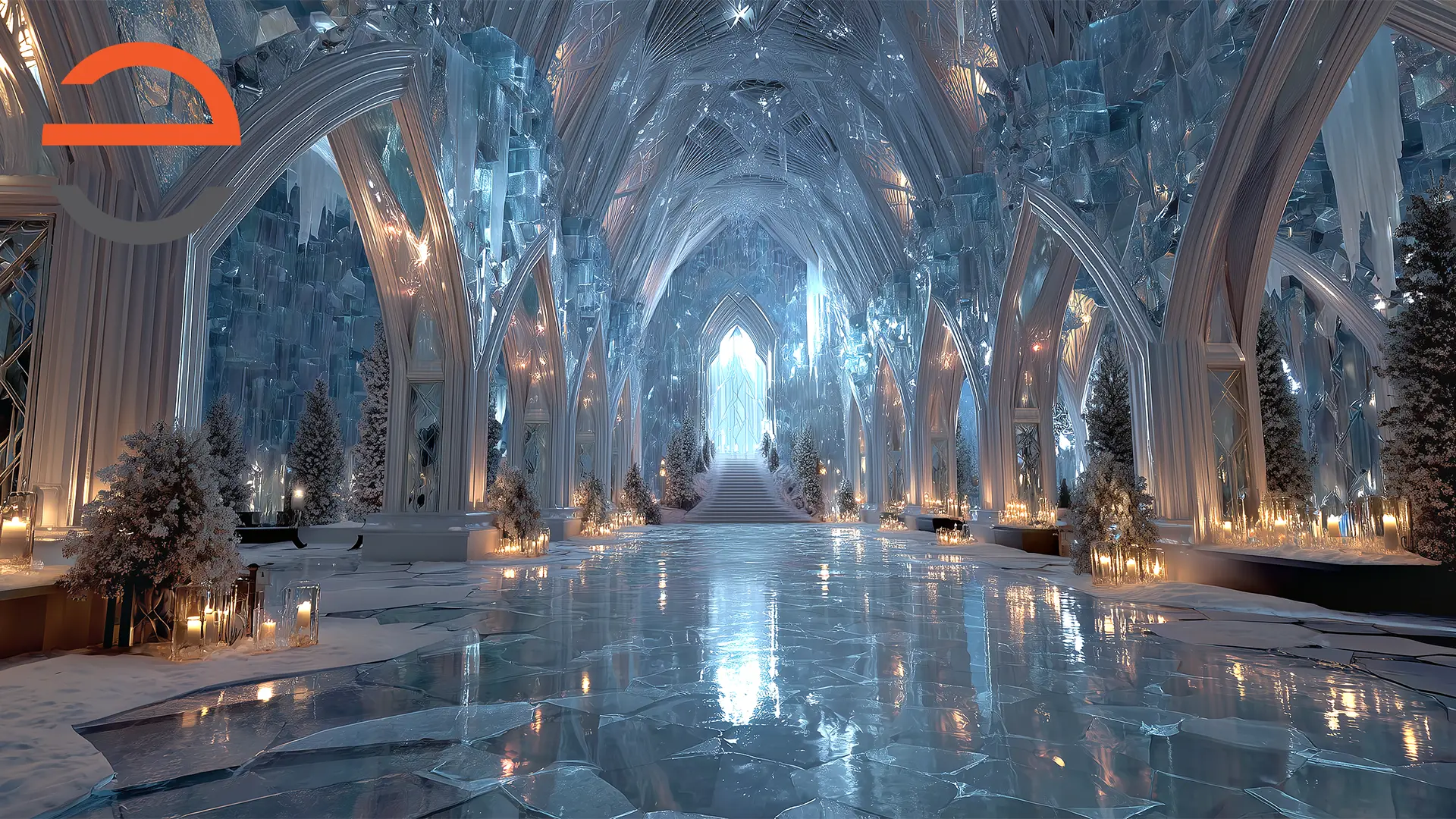
Do More Digital Scenes Mean More Physical Backdrops Avoided?
Not one for one. The advantage is being able to change the visual world without adding a physical scenic element for each change. A digital collection can include daytime, nighttime, and transformation treatments of the same place, all displayed through the same suitable system.
Our Into the Woods imagery follows the forest through changing light and the effects of the giant's destruction. That gives a production visual detail without having to construct each version of the background. A physical design could also use one drop, lighting changes, or reused units, so the number of digital scenes is not the number of physical backdrops avoided.
Count the actual physical elements your design would replace. A scene list tells you what visual options are available; it is not a material-saving calculation. For the difference between scenes and locations, read our guide to musical scene counts.
How Can a Theater Choose a Lower-Waste Scenery Plan?
Start with what your cast needs to touch and what you already own. Keep useful platforms, furniture, and reusable scenic units. Then ask which backgrounds could be digital instead of newly built or painted. For a theater with suitable equipment, that can be a practical route to less construction, fewer new materials, and less scenery to manage at strike.
Plan closing night while you are designing the show. The Broadway Green Alliance's Production & Design Toolkit recommends discussing strike from the start and giving each item an end-of-use plan. Physical pieces may be returned, stored, donated, repaired, or recycled. Where digital scenery removes the need to make a new background, it also removes the need to find a destination for that particular piece afterward.
Compare both plans from beginning to end. Do not count digital electricity while ignoring the sourcing, manufacture, painting, transport, and disposal of new physical scenery. Equally, do not ignore new equipment because the backdrop itself is digital. These guidance sources support careful material choices and reuse; they do not certify our product's footprint.
Our view is clear: digital backdrops deserve serious consideration as a way to reduce unnecessary physical scenery. Their strongest environmental benefit is not a green label. It is the lumber, fabric, paint, deliveries, and discarded scenic elements your actual design no longer needs.
For the financial and practical side, read our honest comparison of theater backdrops and digital projections. Before choosing equipment, use our venue-readiness guide and test preview scenes in your actual room. The goal is a design that serves the story without creating physical scenery you do not need.
| Question | What to record |
|---|---|
| What new materials are needed? | Lumber, sheet goods, fabric, paint, adhesives, and hardware; plus any new display equipment, screens, and supports |
| What needs transport? | Backdrop deliveries and returns, equipment hire, and other trips required by the plan |
| What energy is involved? | Material and equipment manufacture as well as documented display and playback power during rehearsals and performances |
| What happens after closing? | Scenery reuse or disposal, paint and container handling, rental returns, and equipment storage or repair |
It's not magic, it's production. - James
Frequently Asked Questions
Are digital backdrops always better for the environment?
Not always, but they can be a lower-waste choice when they replace new physical scenery, especially with suitable equipment already available. Avoided lumber, fabric, paint, deliveries, and disposal belong in the comparison alongside equipment manufacture, electricity, and physical scenery reuse.
Can digital scenery reduce waste after a school musical?
Yes, where it avoids making physical backgrounds that would otherwise be discarded. Those elements need no new fabric, framing, paint, or destination at strike. Keep reusing useful physical pieces and plan responsible handling of remaining materials and equipment.
What material costs do traditional sets have?
Depending on the design, new physical scenery can require timber, plywood, fabric, paint, adhesives, hardware, and foam. Sourcing, manufacture, transport, leftovers, and end-of-use handling all matter. Reusing stock scenery can reduce that demand.
Does a digital backdrop need shipping?
The digital scene package does not need physical backdrop delivery or return shipping. Equipment may still need delivery, and digital distribution and playback rely on powered infrastructure.
Does saving scenery storage space reduce carbon emissions?
Not necessarily. It can free useful space, but an energy or carbon saving would need evidence that the storage change actually reduced building operation, transport, or another measured activity.
Does each digital scene replace a separate physical backdrop?
No. Several digital scenes may be different treatments of one location. A physical production might use one backdrop with lighting changes or reuse the same scenic pieces for those moments.
Should we buy a new projector to make our production greener?
Test suitable equipment already available first. A system used across shows can support a lower-waste scenery plan, but a new purchase needs a comparison that includes manufacture, delivery, electricity, future use, and the physical scenery it would actually replace.