
Theater Backdrops vs. Digital Projections: An Honest Comparison
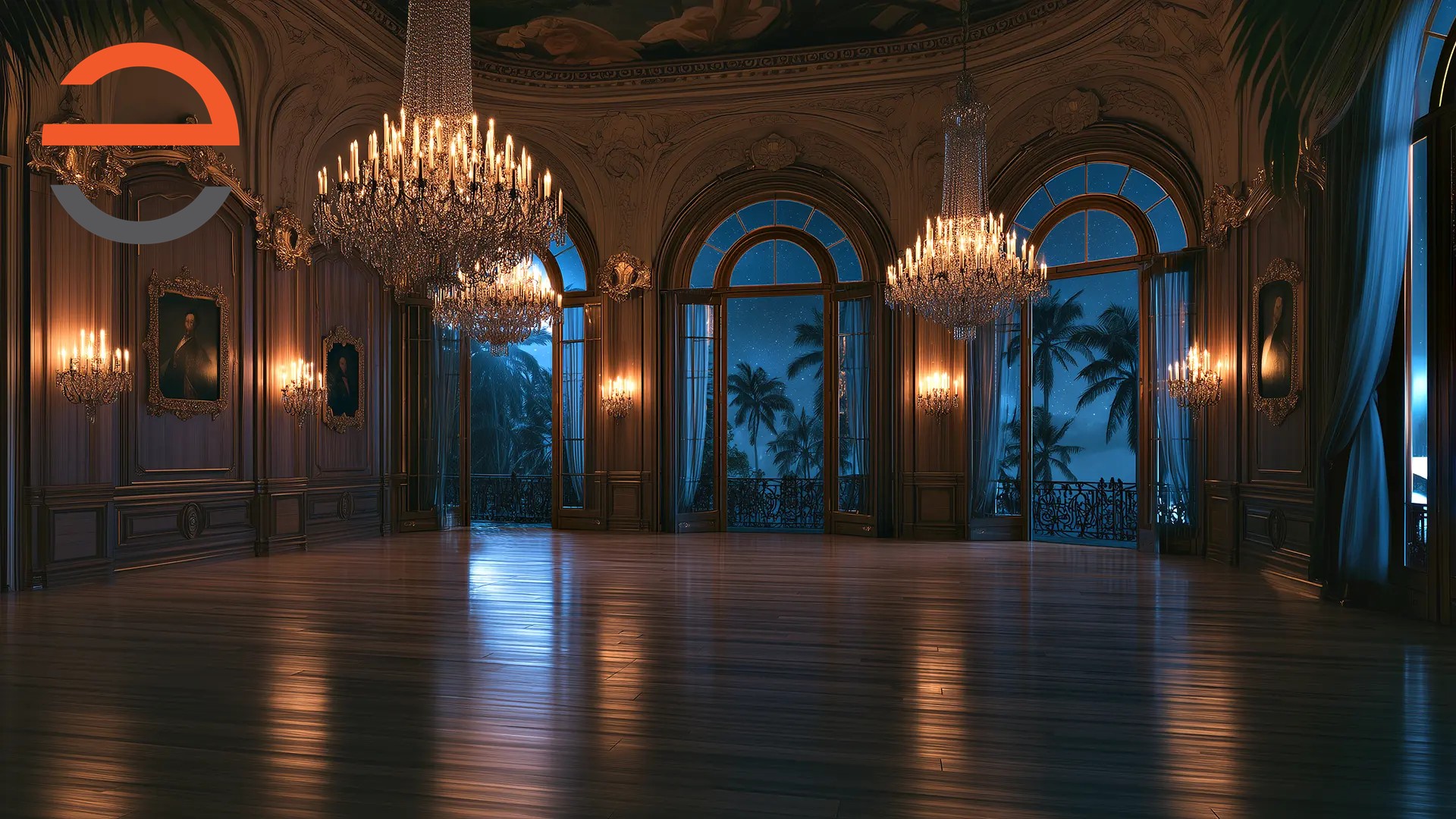
Every production faces the same question early on: how are we going to put the world of this show on stage? For most of theater history the answer was a painted backdrop - a big canvas drop, hung and lit, one per location. Today there's a second serious option: digital projections.
We build digital scenery, so you'd expect us to say projections win every time. They don't. Each approach has real strengths, and the right choice depends on your show, your venue, and your budget. Here's the honest comparison we'd give a friend.
What a Traditional Backdrop Actually Costs
A painted or printed backdrop is a physical thing, and physical things carry physical costs:
Rental or purchase - renting a single quality drop typically runs a few hundred dollars per show; having one custom-painted runs into the thousands. A show with eight locations needs eight of them.
Shipping and storage - drops are large and heavy. They arrive in crates, they have to be hung, and between productions they have to live somewhere.
One look per drop - a painted drop is the same image at every performance, in every scene, in every light. What you rented is what the audience sees.
None of this makes backdrops bad. A beautiful hand-painted drop under good stage lighting is genuinely gorgeous, and for a show that lives in one or two locations, it can be the right answer.
What Digital Projections Do Differently

Digital projections replace the canvas with light. Instead of owning or renting a physical drop per location, you license a set of scenes and play them through a projector:
Every location in the show - a full production package covers every scene in the script, not just the two or three you could afford to rent drops for.
The scene can change on cue - morning becomes midnight, calm becomes storm, a palace freezes over - live, timed to the performance. A painted drop can never do this.
Nothing to ship or store - the scenery is a file. It doesn't arrive in a crate, and it doesn't need a storage unit after strike.
Consistent quality - every location gets the same level of finish, including the ten-second transitional scenes that would never justify their own rented drop.
Where Traditional Backdrops Still Win
Being honest about this matters, because there are real cases where a physical drop is the better tool:
No projection surface - projections need something to land on: a screen, a cyc, a suitable wall. If your venue has none and can't add one, a hung drop solves that problem directly.
Very bright ambient light - projections compete with light. Outdoor daytime performances or venues you can't darken favor physical scenery.
The one-location show - if your entire play happens in one room, one beautiful drop may be simpler and cheaper than a projection setup.
A specific painted aesthetic - some directors want the visible brushwork of a hand-painted drop as a deliberate stylistic choice. That's a legitimate design call, not a compromise.
The Real Cost Comparison
The number that surprises most directors is the per-location cost. Renting quality drops for a show with a dozen locations adds up quickly - and that's before shipping both ways. A full digital production package covering every scene in the same show typically costs less than renting three or four good drops.
The main hardware question is the projector. Many schools, churches, and community venues already own a bright enough projector; if yours doesn't, a rental or a modest purchase covers it, and the same projector serves every future show.
And because digital scenes are licensed rather than built, a small stage can put a ballroom, an ocean, or a frozen palace behind its actors for a fraction of what building or renting the physical equivalent would cost.
A Practical Middle Path
Plenty of productions mix the two: physical set pieces and practical furniture downstage, digital scenery providing the world behind them. The actors work among real objects; the location, the sky, the weather, and the transformations are projected.
That hybrid is where projections tend to shine brightest - they handle the things physical scenery does worst (scale, weather, time of day, transformation) while your built pieces handle the things actors need to touch.
How to Decide for Your Show
Ask three questions:
How many locations does the script visit? The more locations, the stronger the case for digital - per-location cost is where drops get expensive.
Does anything need to change or transform? If a scene must shift in front of the audience, only a projection can do it.
Do you have a surface and a projector? If yes - or if you can get them - digital is on the table. The surest way to know is to test it in your actual venue.
That last point is why we send free preview scenes. You can run a few of our scenes on your own equipment, in your own space, and see the comparison with your own eyes before you commit to anything - just ask.
- James
Frequently Asked Questions
Are digital projections cheaper than renting backdrops?
For most multi-location shows, yes. Renting quality drops for a show with a dozen locations adds up quickly, before shipping both ways. A full digital production package covering every scene typically costs less than renting three or four good drops - and the main hardware, a projector, serves every future show.
Can I mix physical sets with digital projections?
Yes, and it's often the best approach. Use physical set pieces and practical furniture downstage where actors need to touch things, and let digital scenery provide the world behind them - the location, sky, weather, and transformations.
Do projections work in a bright venue?
Projections compete with ambient light, so very bright or outdoor daytime venues favor physical scenery. In a venue you can darken, a reasonably bright projector on a good surface works well - and testing a free preview scene in your actual space settles the question definitively.
When is a traditional painted backdrop the better choice?
When your venue has no projection surface and can't add one, when you can't control ambient light, when the whole show happens in one location, or when the visible brushwork of a hand-painted drop is a deliberate stylistic choice.