
Putting On a Musical Without a Scenery Workshop or Storage Room
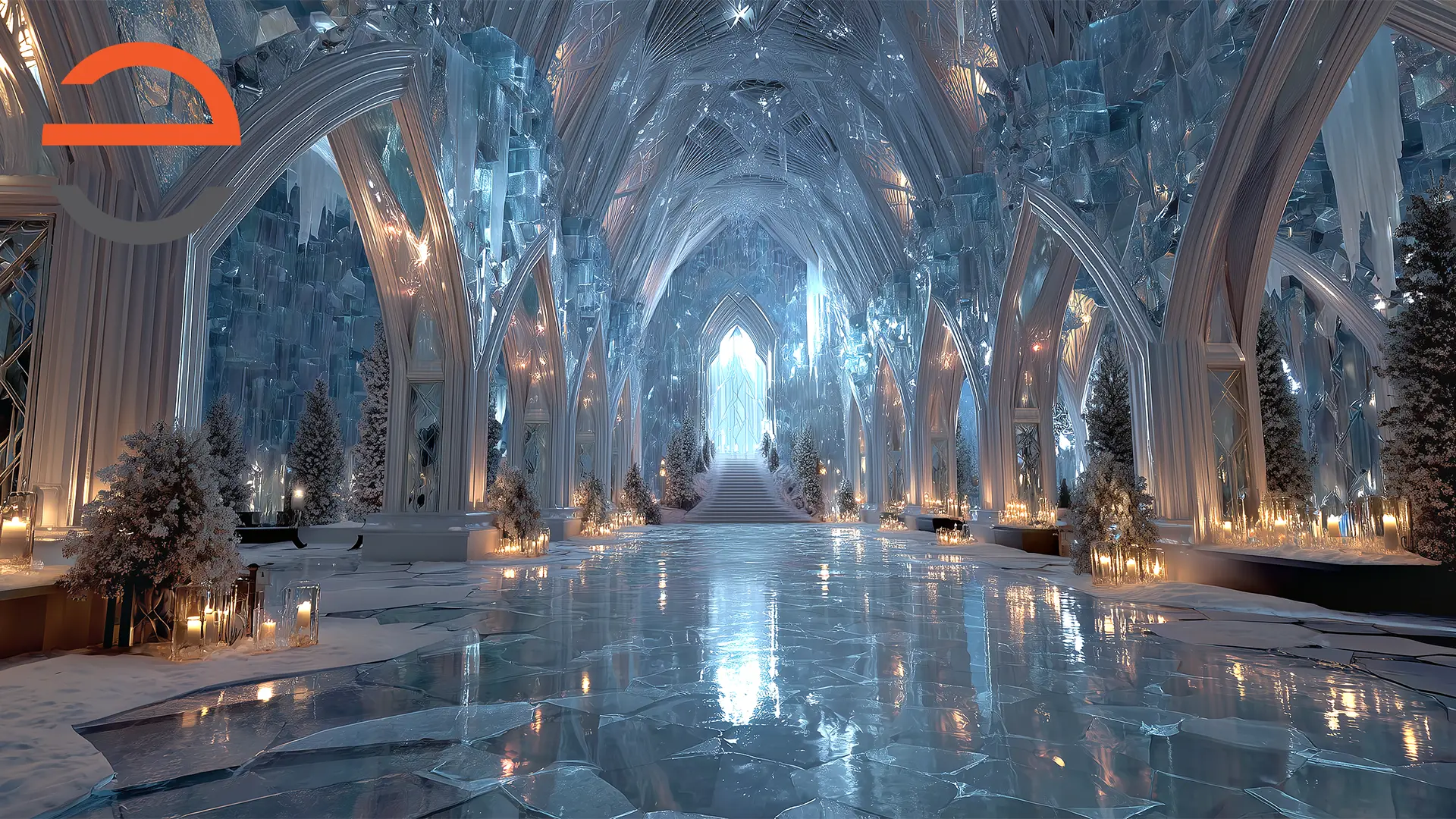
You can put on a musical without a dedicated scenery workshop or a room full of stored backdrops. The useful starting point is to separate what actors need to use from what the audience needs to see. Keep the furniture, props, and physical pieces that serve the action. Digital backdrops can carry the forest, palace, school, or town around them without building and storing each background.
A customer told us that our digital scenery saved storage space and took away much of the burden of creating scenery. The problem is familiar: a school or community theater can have people ready to put on a show without having somewhere to cut, paint, assemble, and keep a large set.
How Do You Plan a Musical Without a Scenery Workshop?
Start with the script, not a shopping list of materials. For each scene, write down the location, what an actor handles, and any action that depends on a physical structure. Sitting on a bench, opening a working door, or stepping onto a platform creates a different requirement from simply showing the audience a garden or a grand hallway.
Then check what you already have permission to use. A stock table, borrowed chair, or reusable unit may do the job without a new build. Confirm availability for rehearsals as well as performances, who can move it, and where it can wait between uses. A borrowed piece is only useful if it fits the action and has an agreed return plan.
Be honest about any construction that remains. If a piece needs cutting, painting, or assembly, arrange an approved workspace and qualified help before committing to it. A hallway is not a workshop simply because it is empty after school.
| Story requirement | Scenery decision | Space to account for |
|---|---|---|
| The audience sees a forest | Consider a digital background | Display and playback equipment, plus any screen or supports |
| An actor sits at a table | Use a suitable physical table | Rehearsal access, backstage position, and a return destination |
| An actor opens a door | Provide a suitable working unit or rethink the blocking | Safe support, movement, and storage of the physical piece |
| The story moves from day to night | Consider a different digital scene and lighting cue | Cue preparation and rehearsal, not another background unit |
Which Physical Set Pieces Do Actors Still Need?
A digital image can show a staircase, but your cast cannot climb it. It can suggest a doorway, but it cannot supply a handle or a safe passage. Keep that distinction in the design meeting. Anything the cast must touch, stand on, move, or pass through needs an appropriate physical solution or a deliberate change to the staging.
This is where a smaller physical set can be more useful than a large decorative one. A few well-chosen pieces give actors something real to work with while the background establishes the wider world. Reusing a piece across scenes may help, provided the changes and movement are rehearsed and the piece remains suitable for each use.
Do not treat fewer scenic units as permission to skip safety checks. Platforms, working doors, supports, and moving pieces still need assessment by the people responsible for your venue and production. We can supply the image behind the action; that does not approve the structure in front of it.
How Can Digital Backdrops Reduce Scenery-Building Work?
Where a digital scene replaces a newly built or painted background, you no longer need to construct that element. Changing from a forest to a palace becomes a playback cue instead of another background to make, move, and find room for.
The scale is easy to underestimate. Our Into the Woods Full Production includes 42 distinct backdrop scenes, and the Jr. version includes 26. None of them need building, painting, moving, or storing between performances. The whole package arrives as a download. See how many scenes your musical needs for the counts across our catalog, or how we give Into the Woods its many forest moods.
Our Frozen Ice Palace artwork is one example of an environment that can appear behind a cast without constructing every column in the picture. The physical design still follows your blocking. If an actor needs an elevated position or a seat, the image does not remove that requirement.
The work changes rather than disappearing. Choose the scenes, test the display, prepare the cue order, and rehearse with the operator. Our scenes are fully animated videos. Each scene repeats on a near-seamless two-minute loop. Watch them through while rehearsing so movement and timing are familiar before an audience arrives.
SceneCaster handles license activation and lets you arrange scenes as cues in show order. Our scenes also run in QLab. Whichever playback fits your booth, allow time to practice the transitions. For more on preparing the scene list, read our script-breakdown guide.

What Still Needs Storage With Digital Scenery?
The background image does not become a rolled drop or a wall unit after closing. But digital scenery is not storage-free. A portable projector, computer, cables, screen, and any stands or supports need secure, suitable storage. Furniture, props, costumes, and the physical pieces your cast uses still need homes too.
Check the equipment plan before choosing the scenery. A venue with a suitable installed projector or LED wall has different storage needs from one hiring a portable system. A screen that looks small when packed may still need substantial room when assembled. Confirm dimensions, cases, handling requirements, and return arrangements with the supplier or venue staff.
Make a simple inventory: item, owner, packed size, storage position, person responsible, and destination after the show. Work from actual measurements rather than assuming everything will fit in the booth. Do not use exits or required access routes as temporary storage.
Before buying or hiring equipment, test preview scenes in your actual room with performance lighting. Use our venue-readiness guide to check the display plan. If the challenge is a gym or cafeteria that must be reset every day, our cafetorium and gym guide covers that separate room-sharing problem.
How Do You Plan Closing Night Without a Storage Room?
Give every physical item a destination before rehearsals begin. Borrowed furniture goes back to its owner. Hired equipment returns under the agreed arrangements. Reusable pieces need a confirmed home, not a hopeful promise that someone will find space later.
Keep a record of the digital cue order and your working settings too. Label and account for the equipment before packing it according to its instructions.
The goal is not a musical with nothing physical onstage. It is a musical without unnecessary scenery to build and keep. Let actors have the pieces they need, let the background carry the surrounding world, and give the remaining equipment a realistic home.
For the financial comparison, read Theater Backdrops vs. Digital Projections. For the separate question of materials and environmental impact, read Are Digital Backdrops Better for the Environment?. Here, the benefit is simpler: less scenery-building where it is not needed, and less physical background to store when the curtain comes down.
Ready to see what your show could look like? Browse our productions.
It's not magic, it's production. - James
Frequently Asked Questions
Can a school stage a musical without a scenery workshop?
Yes, with a design that fits the available space and resources. Separate background imagery from the pieces actors need to use, consider stock or borrowed items, and arrange an approved workspace and qualified help for any construction that remains.
Do digital backdrops replace the entire physical set?
No. They can carry the surrounding environment, but actors still need suitable physical furniture, props, platforms, and working pieces wherever the action requires them.
Do digital backdrops need a storage room?
The digital background does not need physical scenery storage. Portable display and playback equipment, screens, supports, and the rest of the production still need secure storage or agreed return arrangements.
Will digital scenery save us a specific number of building hours?
That depends on what your design would otherwise require. A customer reported less scenery-building burden and saved storage space, but we do not have measured hours or space savings. Compare the actual physical elements avoided with the equipment and cue preparation still needed.
Can we use an existing school projector?
Possibly. Test real preview scenes on the intended surface under performance lighting before committing. Check image size, throw distance, brightness, actor shadows, and equipment placement with the staff responsible for the room.
What should we decide before closing night?
Agree on where every physical item will go, who returns borrowed or hired items, who handles equipment, and where owned pieces will be stored. Make that plan during design rather than after the final performance.